


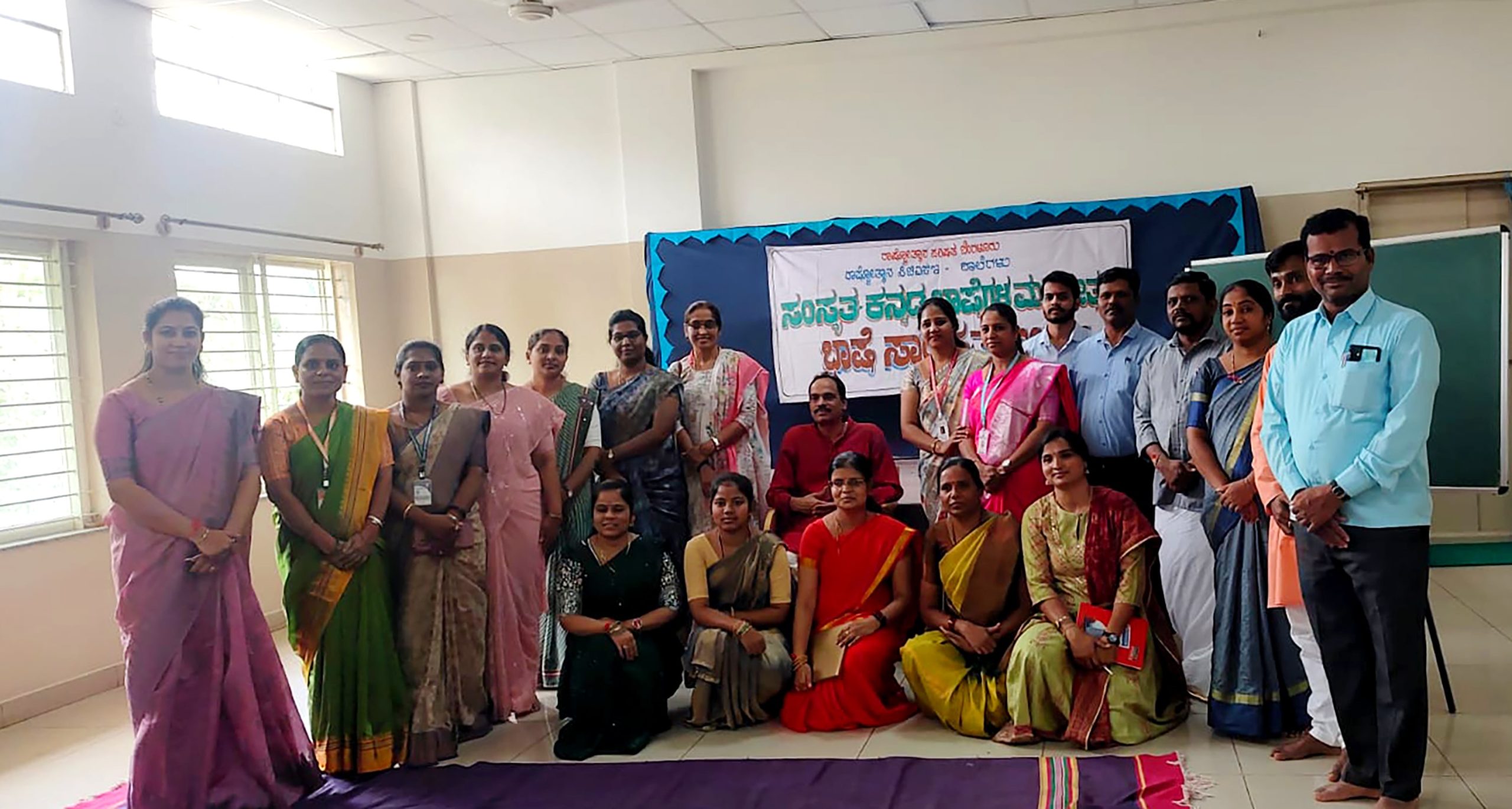
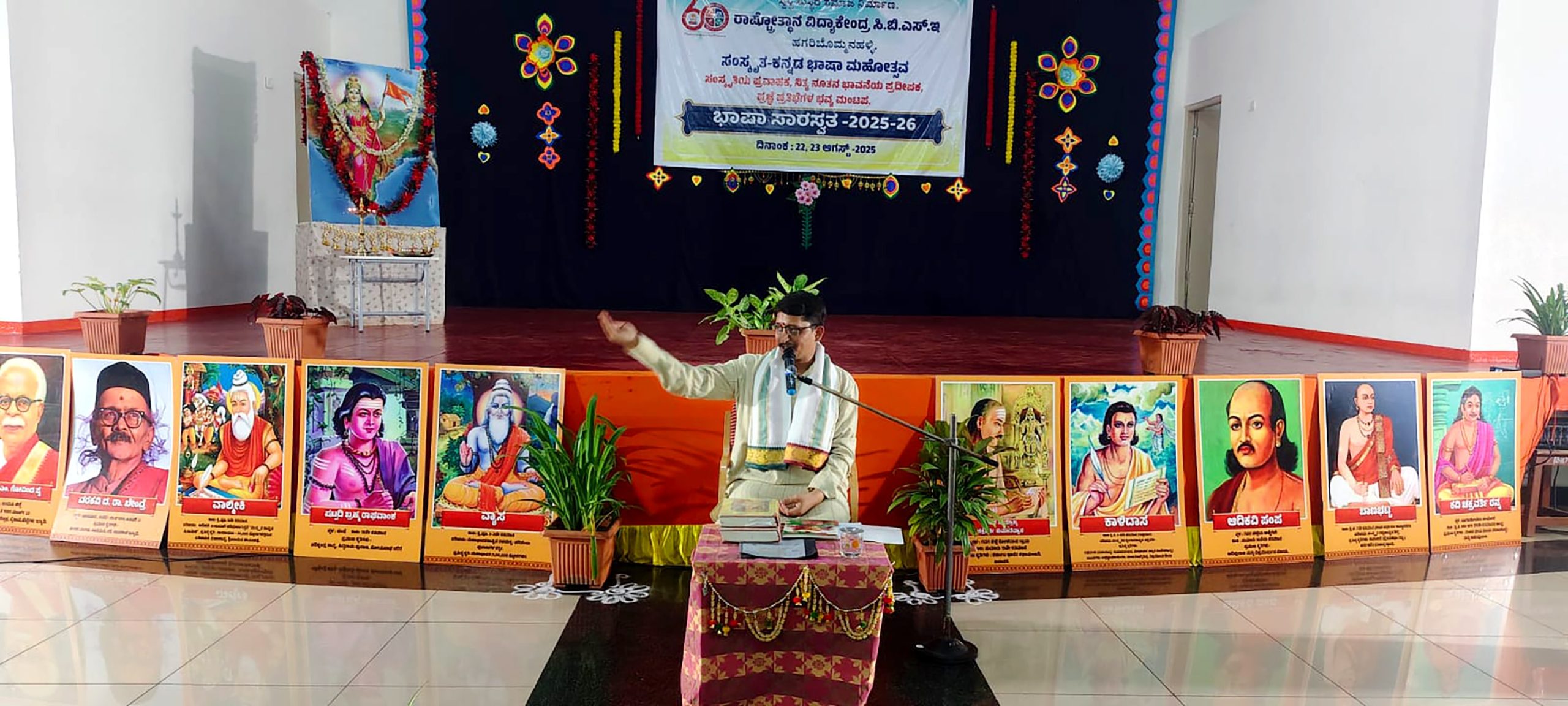
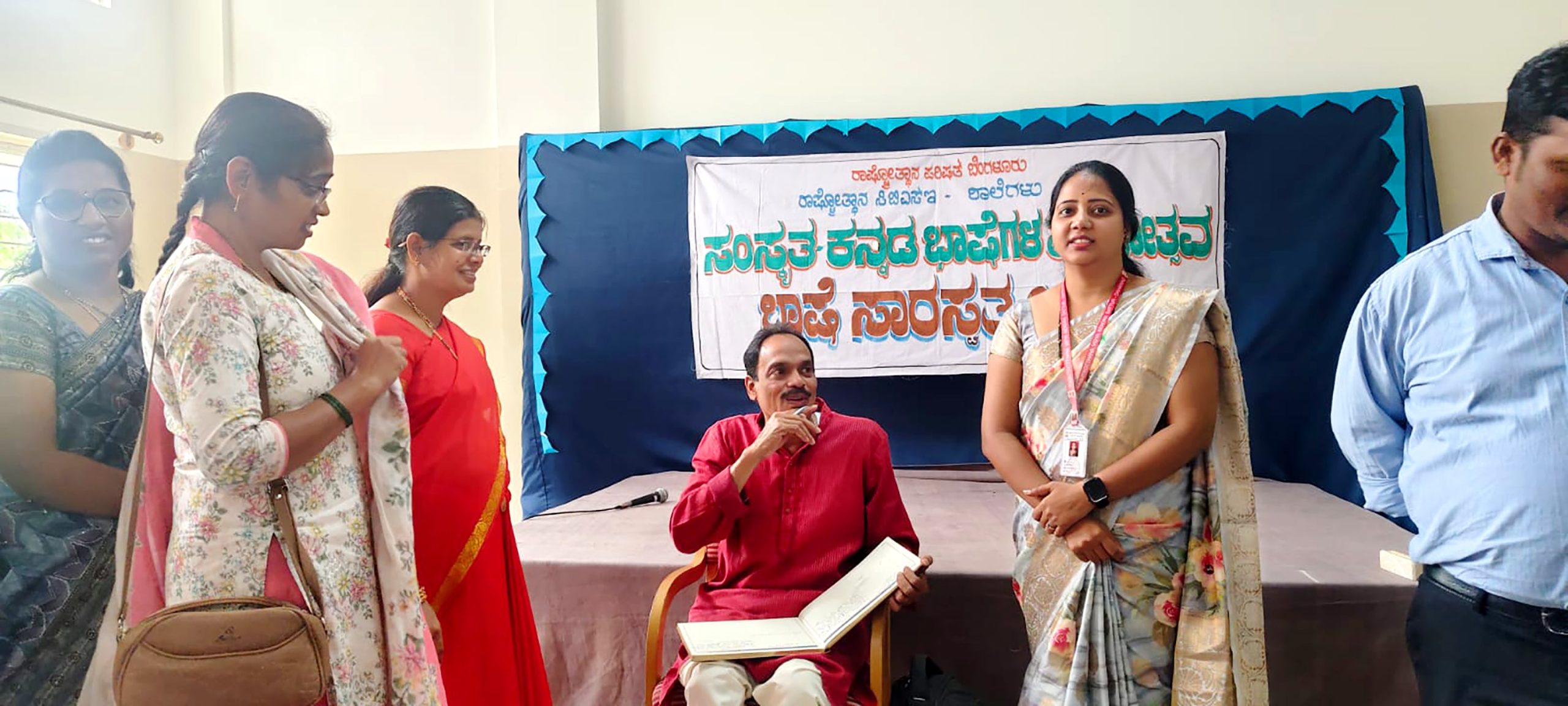
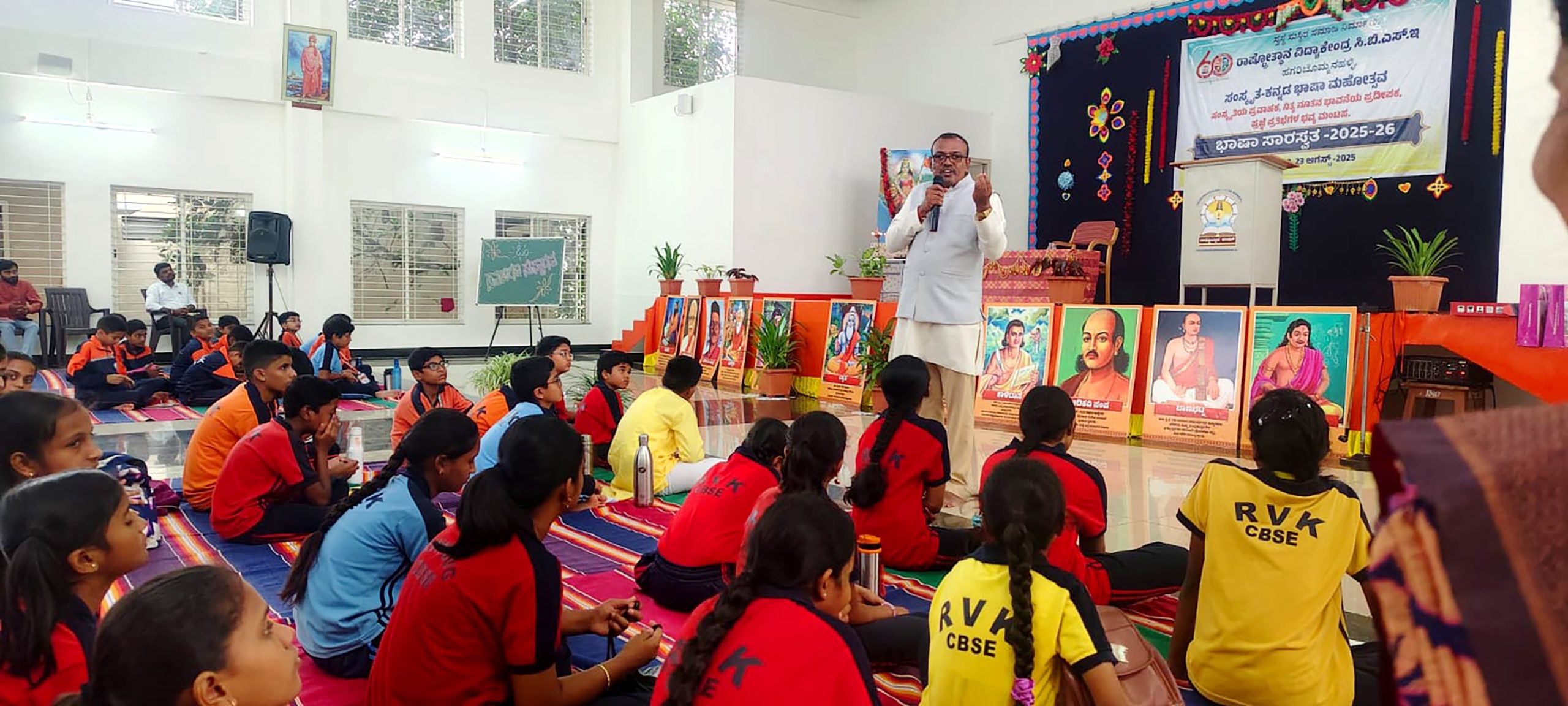
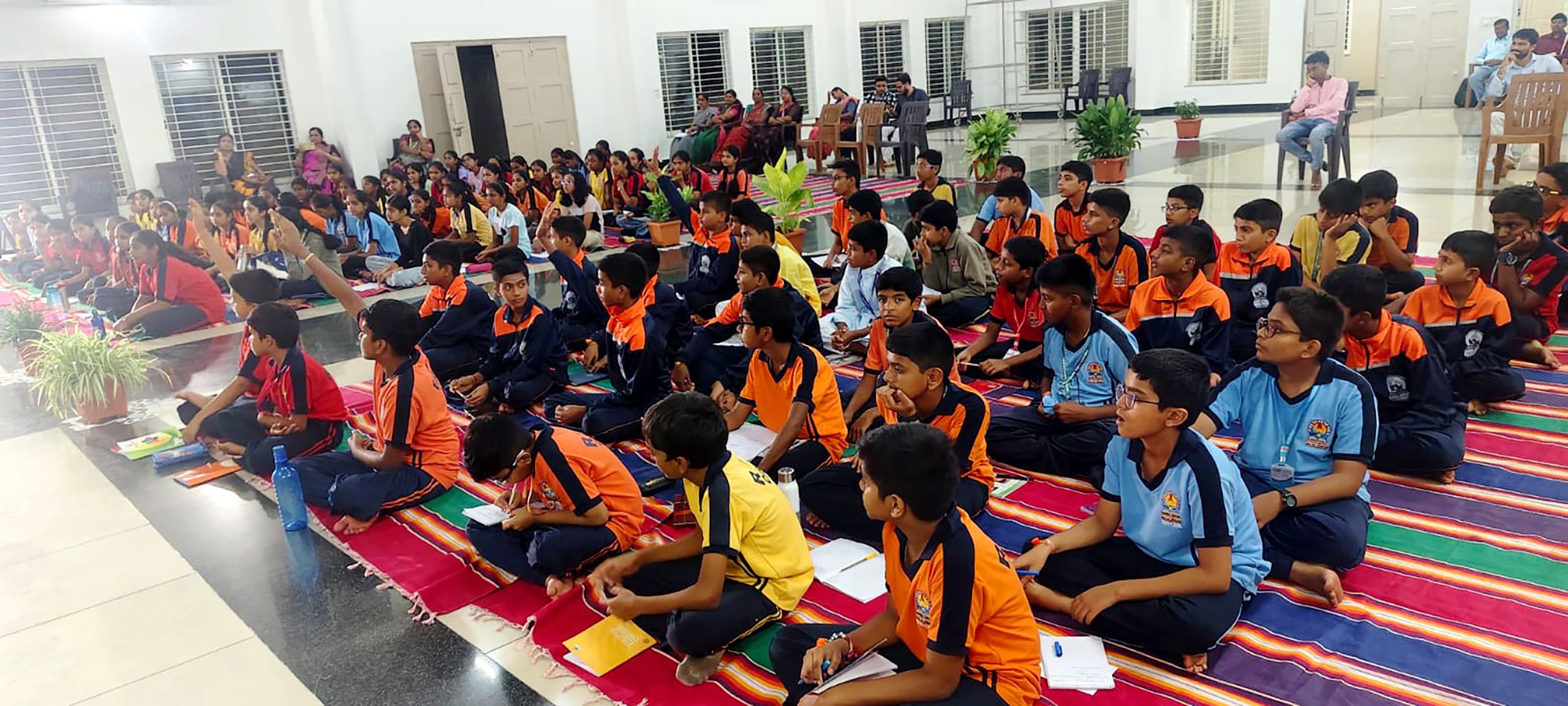
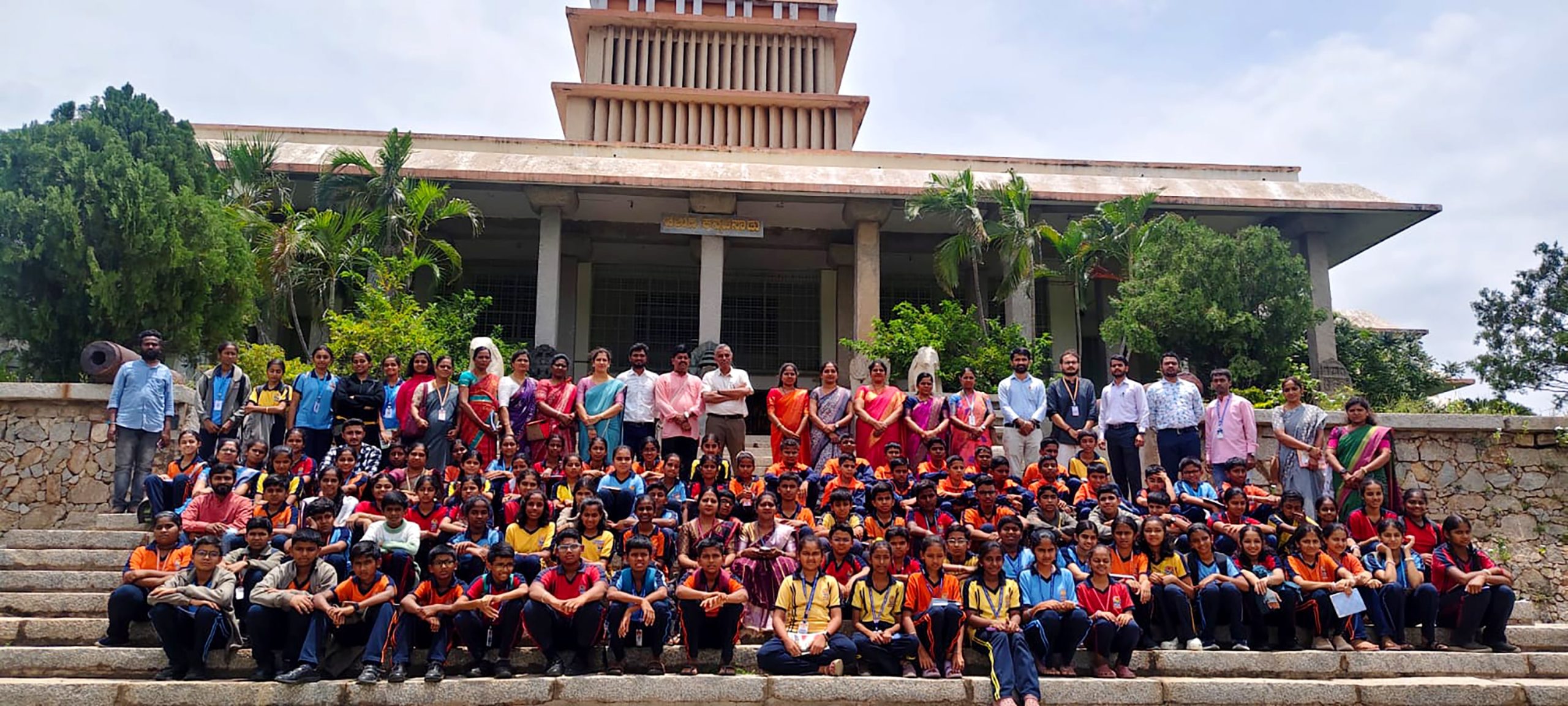
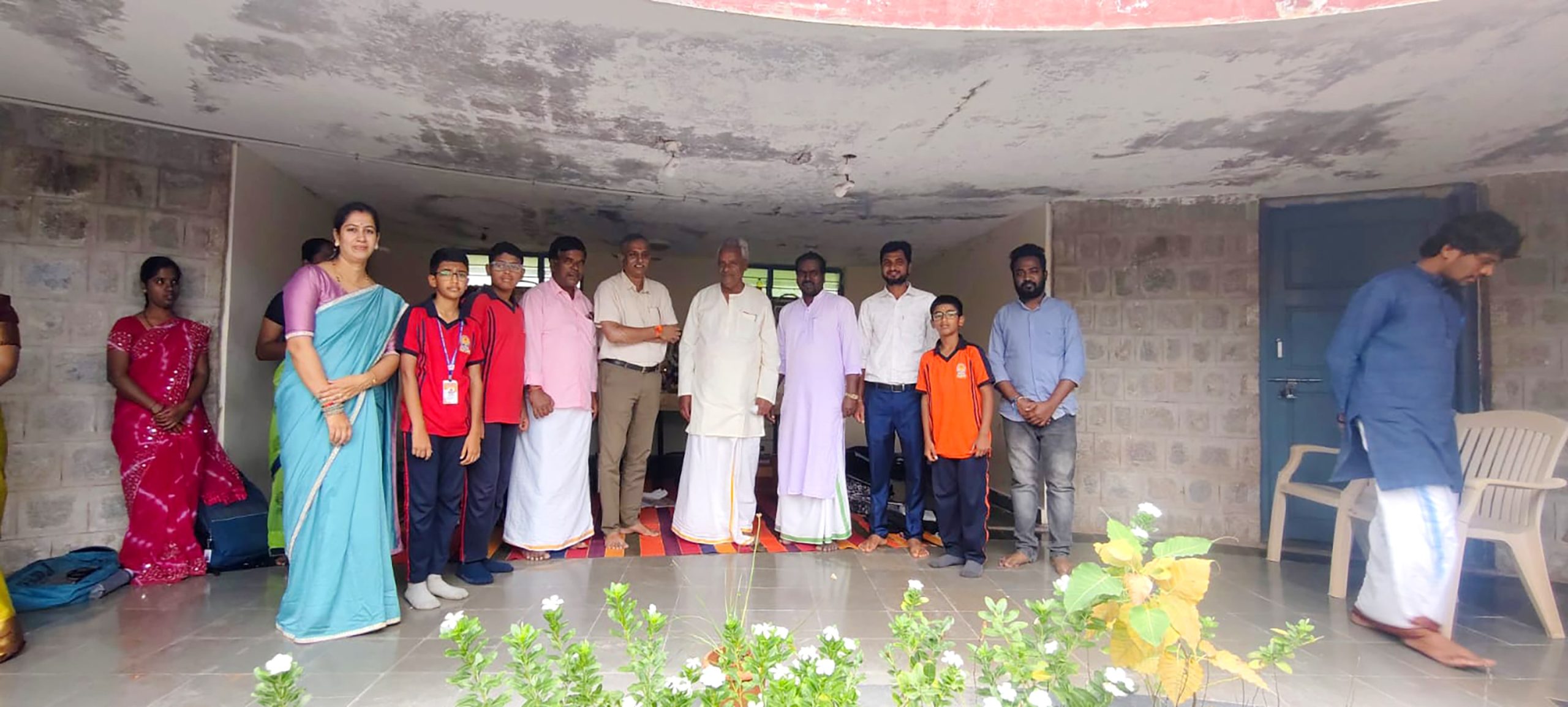
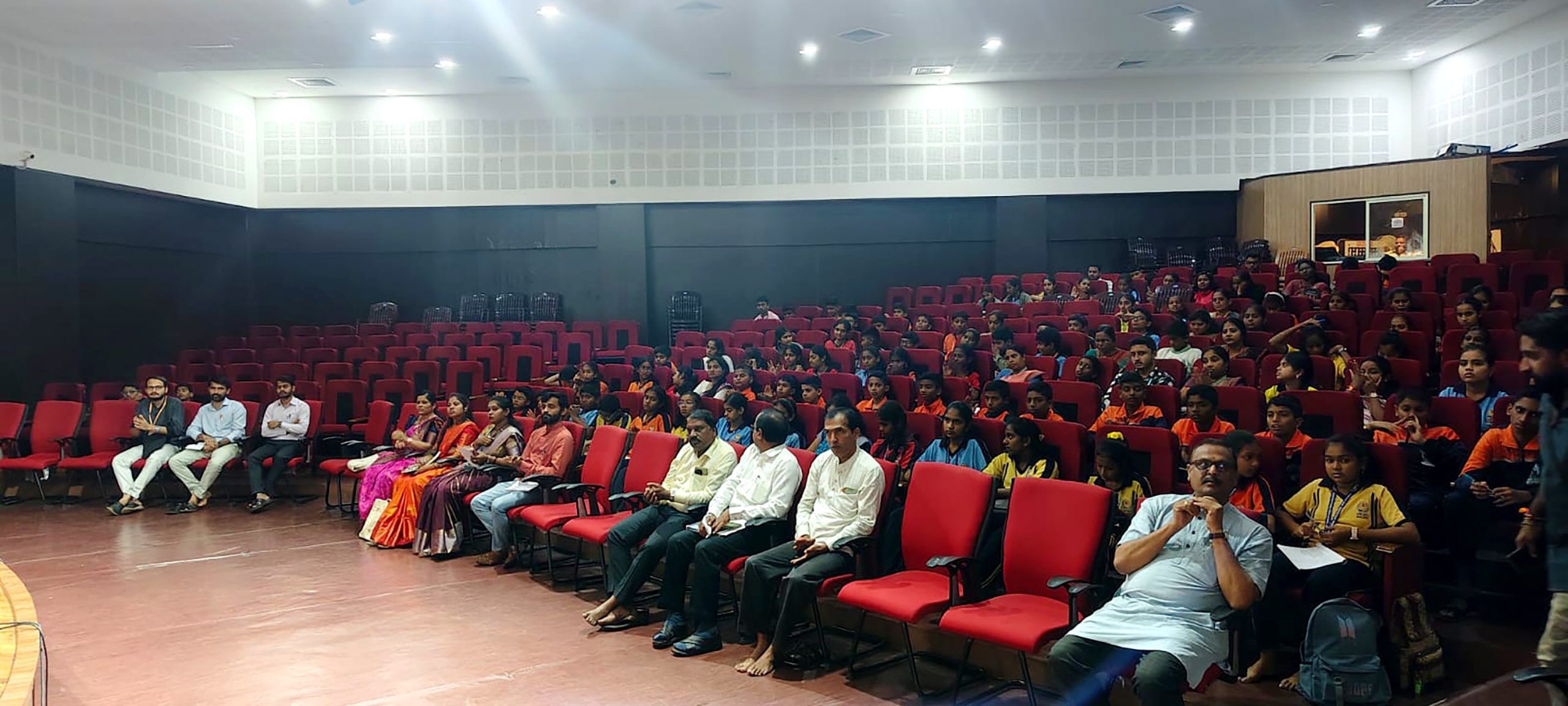
Hagaribommanahalli, Aug. 22-23: Kannada and Sanskrit Language Festival was held herein Rashtrotthana Vidya Kendra – Hagaribommanahalli.
Day 1:
Students were taken to Hampi Kannada University. The inauguration ceremony was held at Hampi Kannada University. Dr. Madhava Peraje, Dean of Bhasha Nikaya, spoke on the origin and development of language and said, “Language is an important means of human communication. When humans started living in groups, there was a need to share their feelings, needs and ideas. Although communication was initially done using gestures, movements and sounds, gradually they took the form of words and grew into language.”
History professor Dr. Somashekar said, “There are many stages in the development of language. In the beginning, basic sounds emerged, then signs, then words and sentences. Language flourished through literature, grammar, script and literary works in line with the development of society. Today, languages are not limited to just conversation; they are also important tools for the dissemination of science, technology, literature, art and social knowledge. The origin of language is an important stage in human history and its development reflects the richness of human culture.”
Speaking on the topic of application of grammar in business, Dr. Nagaraj K.K. of Pearl Public School said, “Communication is very important in business. Be it writing a letter to a customer, sending an email, advertising or preparing contracts – clarity, purity and politeness are necessary everywhere. Grammar is the cornerstone in achieving this.”
Later, Dr. Uma Maheshwar, a scholar from Bengaluru, spoke on the topic of the message of Ramayana for daily life and said, “Ramayana is not just a myth, it is a guide for human life. From the life of Sri Rama, we learn the values of truth, religion, bravery and gratitude. Rama’s ideal role, Sita’s courage and Hanuman’s devotion embody the qualities that we should follow in our lives. Family harmony, respect for elders, loyalty in friendship, tolerance and piety are the important messages of Ramayana. If these are implemented in daily life, peace, harmony and morality can be developed in the society.”
Day 2
Session Topic: Contribution of Vachana Literature to Kannada Language.
Speaker: Nagendra Swamy
Dr. Nagendra Swamy delivered a lecture on the important topic of “Contribution of Vachana Literature to Kannada Language”.
In his lecture, he explained that Vachana literature is a symbol of the 12th century Bhakti movement and the immense contribution made by Sharanas like Basavanna, Akkamahadevi, Allama Prabhu to Kannada. He said that Sharanas instilled the values of equality, truth, non-violence, honesty and devotion in society through Vachanas.
Dr. Nagavendra Swamy expressed the opinion that Vachana literature brought Kannada closer to the lives of the common people and that it was not just religious poetry but also a force for social revolution. He emphasized that Vachanas are simple, easy and written in the Kannada of the common people, and they continue to attract people even today. He gave a good explanation on what should be done in good manners.
Keynote Address: Relationship between Kannada and Sanskrit
Speaker: Surya Hebbar
He explained that Sanskrit and Kannada languages complement each other and have supported each other for thousands of years. He said with examples that Sanskrit has a deep influence on the grammar, economics and poetic styles of Kannada. He recalled how old poets, especially Pampa, Ranna, Janna, used Sanskrit vocabulary in their works to preserve the uniqueness of Kannada.
He said that it is our pride that Kannada has retained its own independent voice, style and popularity, even though it has adopted many words from Sanskrit. He opined that the harmony of Sanskrit and the emotional style of Kannada have together enriched the Indian knowledge heritage.
In conclusion, he asserted that “Kannada and Sanskrit languages are sister languages not only in literature, but also in culture, religion and knowledge heritage.” He also talked about the story of Angulimala, the brotherly bond between Vali and Sugriva. He gave detailed information about how Sanskrit and Kannada are two sides of the same coin, and without Sanskrit, Kannada has no joy, enthusiasm or power.
Later, on the topic of Bhagavad Gita, a stepping stone to a smooth life, “The great scripture Bhagavad Gita is the essence of all Vedas and Vedantas. The Vedas are the speech of God and the Bhagavad Gita is equal to the Vedas. The Vedas and the Bhagavad Gita are both emanated from God himself,” said Baligadde, a retired professor of Vedanta.
Session: Ashtavadhana
Anirudh gave a detailed explanation of the meaning of Ashtavadhana and its function.
Avadhana means giving the mind to many things. Kumbhavadana means filling water in a family and people standing around it. The Avadhana being conducted on this day is called Ashtavadhana because different speakers present here discuss the topic. It is held in 4 rounds.
- Subject: Imperfect letters
- Problem: Attention
- Given copy (one letter should appear in all sentences)
- Picture poetry
- Ashu poetry
- Poetry reading
- Irrelevant postures
- Numbered:
Avadhani:
Surya Bengaluru, Aniruddha, Raghavendra Udupi, Balachandra Mysuru (Chitragunda), Ravichandra Ballari (on Sakhyabhandha), Venkatesh Acharya, Shankar Bhat (Swarnavalli), Srivatsa (Sringeri).
The Avadhana began with the opening verse:
A verse from the Sragdhara on Bhasha Saraswat, a verse from the Vikriditha Vritta (a verse on the attire of Saraswati) was narrated by the high school teachers (in the standard method).
Overall, the Bhasha Saraswat program was very well done. The visit to Hampi University increased the literary knowledge of the students. The expansion of the Ramayana and Mahabharata poems was touching the hearts of the children. The Ashtavadhana program was very delicious. Teachers and 97 students from various projects of national upliftment were present.
ಹಗರಿಬೊಮ್ಮನಹಳ್ಳಿ, ಆ. 22-23: ರಾಷ್ಟ್ರೋತ್ಥಾನ ವಿದ್ಯಾಕೇಂದ್ರ – ಹಗರಿಬೊಮ್ಮನಹಳ್ಳಿಯಲ್ಲಿ ಕನ್ನಡ ಹಾಗೂ ಸಂಸ್ಕೃತ ಭಾಷಾ ಉತ್ಸವ ಜರುಗಿತು.
ದಿನ 1:
ಹಂಪಿ ಕನ್ನಡ ವಿಶ್ವವಿದ್ಯಾಲಯಕ್ಕೆ ವಿದ್ಯಾರ್ಥಿಗಳನ್ನು ಕರೆದುಕೊಂಡು ಹೋಗಲಾಯಿತು. ಹಂಪಿ ಕನ್ನಡ ವಿಶ್ವವಿದ್ಯಾಲಯದಲ್ಲಿ ಉದ್ಘಾಟನಾ ಸಮಾರಂಭ ನೆರವೇರಿತು. ಭಾಷಾ ನಿಕಾಯ ಡೀನ್ ಆದ ಡಾ. ಮಾಧವ ಪೆರಾಜೆ ಅವರು ಭಾಷೆಯ ಉಗಮ ಮತ್ತು ಬೆಳವಣಿಗೆ ವಿಷಯದ ಕುರಿತು ಮಾತನಾಡಿ “ಭಾಷೆ ಮಾನವನ ಸಂವಹನದ ಪ್ರಮುಖ ಸಾಧನವಾಗಿದೆ. ಮಾನವನು ಗುಂಪಾಗಿ ಬಾಳಲು ಆರಂಭಿಸಿದಾಗ, ತಮ್ಮ ಭಾವನೆಗಳನ್ನು, ಅಗತ್ಯಗಳನ್ನು ಹಾಗೂ ವಿಚಾರಗಳನ್ನು ಹಂಚಿಕೊಳ್ಳಬೇಕಾದ ಅವಶ್ಯಕತೆ ಮೂಡಿತು. ಮೊದಲು ಇಂಗಿತಗಳು, ಚಲನಗಳು ಹಾಗೂ ಶಬ್ದಗಳನ್ನು ಬಳಸಿ ಸಂವಹನ ನಡೆದರೂ, ಕ್ರಮೇಣ ಅವು ಪದಗಳ ರೂಪ ಪಡೆದು ಭಾಷೆಯಾಗಿ ಬೆಳೆದವು ” ಎಂದರು.
ಇತಿಹಾಸ ಪ್ರಾಧ್ಯಾಪಕರಾದ ಡಾ. ಸೋಮಶೇಖರ್ ಅವರು “ಭಾಷೆಯ ಬೆಳವಣಿಗೆಯಲ್ಲಿ ಹಲವು ಹಂತಗಳನ್ನು ಕಾಣಬಹುದು. ಪ್ರಾರಂಭದಲ್ಲಿ ಮೂಲಭೂತ ಧ್ವನಿಗಳು, ನಂತರ ಚಿಹ್ನೆಗಳು, ಆಮೇಲೆ ಪದಗಳು ಹಾಗೂ ವಾಕ್ಯಗಳು ಹುಟ್ಟಿಕೊಂಡವು. ಸಮಾಜದ ಅಭಿವೃದ್ದಿಗೆ ಅನುಸಾರವಾಗಿ ಸಾಹಿತ್ಯ, ವ್ಯಾಕರಣ, ಲಿಪಿ ಹಾಗೂ ಸಾಹಿತ್ಯಕ ಕೃತಿಗಳ ಮೂಲಕ ಭಾಷೆ ಸಮೃದ್ಧಿ ಪಡೆದಿತು. ಇಂದು ಭಾಷೆಗಳು ಕೇವಲ ಮಾತುಕತೆಗಷ್ಟೇ ಸೀಮಿತವಾಗಿಲ್ಲ; ವಿಜ್ಞಾನ, ತಂತ್ರಜ್ಞಾನ, ಸಾಹಿತ್ಯ, ಕಲೆ ಮತ್ತು ಸಾಮಾಜಿಕ ಜ್ಞಾನಗಳ ಪ್ರಸಾರಕ್ಕೂ ಮಹತ್ವದ ಸಾಧನಗಳಾಗಿವೆ. ಭಾಷೆಯ ಉಗಮವು ಮಾನವ ಇತಿಹಾಸದ ಮಹತ್ವದ ಹಂತವಾಗಿದ್ದು, ಅದರ ಬೆಳವಣಿಗೆಯು ಮಾನವ ಸಂಸ್ಕೃತಿಯ ಶ್ರೀಮಂತಿಕೆಯನ್ನು ಪ್ರತಿಬಿಂಬಿಸುತ್ತದೆ ” ಎಂದರು.
ವ್ಯವಹಾರದಲ್ಲಿ ವ್ಯಾಕರಣದ ಅಳವಡಿಕೆ ವಿಷಯದ ಕುರಿತು ಪರ್ಲ್ ಪಬ್ಲಿಕ್ ಶಾಲೆಯ ಡಾ. ನಾಗರಾಜ್ ಕೆ. ಕೆ. ಅವರು ಮಾತನಾಡಿ “ವ್ಯವಹಾರದಲ್ಲಿ ಸಂವಹನ ಅತ್ಯಂತ ಪ್ರಮುಖವಾದದ್ದು. ಗ್ರಾಹಕರಿಗೆ ಪತ್ರ ಬರೆಹವಾಗಲಿ, ಇಮೇಲ್ ಕಳುಹಿಸುವುದಾಗಲಿ, ಜಾಹೀರಾತು ಮಾಡುವುದಾಗಲಿ ಅಥವಾ ಒಪ್ಪಂದಗಳನ್ನು ಸಿದ್ಧಪಡಿಸುವುದಾಗಲಿ – ಎಲ್ಲೆಡೆ ಸ್ಪಷ್ಟತೆ, ಶುದ್ಧತೆ ಮತ್ತು ಶಿಷ್ಟತೆ ಅಗತ್ಯ. ಇದನ್ನು ಸಾಧಿಸುವಲ್ಲಿ ವ್ಯಾಕರಣವು ಮೂಲಾಧಾರ” ಎಂದರು.
ನಂತರದ ಅವಧಿಯಲ್ಲಿ ಬೆಂಗಳೂರಿನ ಅವಧಾನಿಗಳಾದ ಡಾ. ಉಮಾಮಹೇಶ್ವರ ಅವರು ದೈನಂದಿನ ಜೀವನಕ್ಕೆ ರಾಮಾಯಣದ ಸಂದೇಶ ಎಂಬ ವಿಷಯದ ಕುರಿತು ಮಾತನಾಡಿ “ರಾಮಾಯಣವು ಕೇವಲ ಪುರಾಣಕಥೆಯಲ್ಲ, ಮಾನವ ಜೀವನಕ್ಕೆ ಮಾರ್ಗದರ್ಶಿಯಾಗಿದೆ. ಶ್ರೀರಾಮನ ಜೀವನದಿಂದ ನಾವು ಸತ್ಯ, ಧರ್ಮ, ಶೌರ್ಯ ಮತ್ತು ಕೃತಜ್ಞತೆ ಎಂಬ ಮೌಲ್ಯಗಳನ್ನು ಕಲಿಯುತ್ತೇವೆ. ರಾಮನ ಆದರ್ಶಪಾತ್ರ, ಸೀತೆಯ ಧೈರ್ಯ ಹಾಗೂ ಹನುಮಾನದ ಭಕ್ತಿ ನಮ್ಮ ಜೀವನದಲ್ಲಿ ಅನುಸರಿಸಬೇಕಾದ ಗುಣಗಳನ್ನು ಸಾರುತ್ತವೆ. ಕುಟುಂಬಸೌಹಾರ್ದ, ಹಿರಿಯರಿಗೆ ಗೌರವ, ಸ್ನೇಹದಲ್ಲಿ ನಿಷ್ಠೆ, ಕಷ್ಟಸಹನೆ ಹಾಗೂ ಧರ್ಮನಿಷ್ಠತೆ ರಾಮಾಯಣದ ಪ್ರಮುಖ ಸಂದೇಶಗಳು. ಇವುಗಳನ್ನು ದೈನಂದಿನ ಜೀವನದಲ್ಲಿ ಅಳವಡಿಸಿಕೊಂಡರೆ ಸಮಾಜದಲ್ಲಿ ಶಾಂತಿ, ಸೌಹಾರ್ದ ಮತ್ತು ನೈತಿಕತೆ ಬೆಳೆಸಬಹುದು” ಎಂದು ವಿದ್ಯಾರ್ಥಿಗಳಿಗೆ ಹೇಳಿದರು.
ದಿನ 2:
ಅವಧಿ: ಕನ್ನಡ ಭಾಷೆಗೆ ವಚನ ಸಾಹಿತ್ಯದ ಕೊಡುಗೆ
ವಕ್ತಾರರು: ನಾಗೇಂದ್ರ ಸ್ವಾಮಿ
ಡಾ. ನಾಗವೇಂದ್ರ ಸ್ವಾಮಿ ಅವರು “ಕನ್ನಡ ಭಾಷೆಗೆ ವಚನ ಸಾಹಿತ್ಯದ ಕೊಡುಗೆ” ಎಂಬ ಮಹತ್ವದ ವಿಷಯದ ಕುರಿತು ಉಪನ್ಯಾಸ ನೀಡಿದರು.
ಅವರು ತಮ್ಮ ಉಪನ್ಯಾಸದಲ್ಲಿ, ವಚನ ಸಾಹಿತ್ಯವು 12ನೇ ಶತಮಾನದ ಭಕ್ತಿವಾದ ಚಳವಳಿಯ ಪ್ರತೀಕವಾಗಿದ್ದು, ಬಸವಣ್ಣ, ಅಕ್ಕಮಹಾದೇವಿ, ಅಲ್ಲಮಪ್ರಭು ಮುಂತಾದ ಶರಣರು ಕನ್ನಡಕ್ಕೆ ನೀಡಿದ ಅಪಾರ ಕೊಡುಗೆಯನ್ನು ವಿವರಿಸಿದರು. ವಚನಗಳ ಮೂಲಕ ಶರಣರು ಸಮಾಜದಲ್ಲಿ ಸಮಾನತೆ, ಸತ್ಯ, ಅಹಿಂಸೆ, ಪ್ರಾಮಾಣಿಕತೆ ಮತ್ತು ಭಕ್ತಿಯ ಮೌಲ್ಯಗಳನ್ನು ಬೆಳೆಸಿದರು ಎಂದು ತಿಳಿಸಿದರು.
ಡಾ. ನಾಗವೇಂದ್ರ ಸ್ವಾಮಿ ಅವರು ವಚನ ಸಾಹಿತ್ಯವು ಕನ್ನಡ ಭಾಷೆಯನ್ನು ಜನಸಾಮಾನ್ಯರ ಜೀವನಕ್ಕೆ ಹತ್ತಿರಮಾಡಿ, ಅದು ಕೇವಲ ಧಾರ್ಮಿಕ ಕಾವ್ಯವಲ್ಲದೇ ಸಾಮಾಜಿಕ ಕ್ರಾಂತಿಯ ಶಕ್ತಿಯಾಗಿದೆ ಎಂದು ಅಭಿಪ್ರಾಯ ವ್ಯಕ್ತಪಡಿಸಿದರು. ವಚನಗಳು ಸರಳ, ಸುಲಭ ಮತ್ತು ಸಾಮಾನ್ಯ ಜನರ ಮಾತಿನ ಕನ್ನಡದಲ್ಲಿ ಬರೆಯಲ್ಪಟ್ಟಿದ್ದರಿಂದ ಇಂದಿಗೂ ಜನಮನ ಸೆಳೆಯುತ್ತಿವೆ ಎಂಬುದನ್ನು ಅವರು ಒತ್ತಿ ಹೇಳಿದರು. ನಡೆ ನುಡಿ ಆಚಾರ ಉತ್ತಮವಾಗಿರಬೇಕು. ಸಮಾಜಮುಖಿಯಾಗಿ ಇರಬೇಕು. ಎಂಬುದರ ಕುರಿತು ಉತ್ತಮವಾಗಿ ವಿವರಣೆಯನ್ನು ನೀಡಿದರು.
ಅವಧಿ: ಕನ್ನಡ ಮತ್ತು ಸಂಸ್ಕೃತ ಭಾಷಾ ಬಾಂಧವ್ಯ
ಮುಖ್ಯ ವಕ್ತಾರರು: ಸೂರ್ಯ ಹೆಬ್ಬಾರ್
ಸಂಸ್ಕೃತ ಮತ್ತು ಕನ್ನಡ ಭಾಷೆಗಳು ಪರಸ್ಪರ ಪೂರಕವಾಗಿದ್ದು, ಸಾವಿರಾರು ವರ್ಷಗಳಿಂದ ಒಂದಕ್ಕೊಂದು ಬೆಂಬಲವಾಗಿವೆ ಎಂದು ವಿವರಿಸಿದರು. ಕನ್ನಡದ ವ್ಯಾಕರಣ, ಅರ್ಥಶಾಸ್ತ್ರ ಮತ್ತು ಕಾವ್ಯಶೈಲಿಗಳ ಮೇಲೆ ಸಂಸ್ಕೃತದ ಆಳವಾದ ಪ್ರಭಾವವಿದೆ ಎಂದು ಉದಾಹರಣೆಗಳೊಂದಿಗೆ ಹೇಳಿದರು. ಹಳೆಯ ಕವಿಗಳು, ವಿಶೇಷವಾಗಿ ಪಂಪ, ರನ್ನ, ಜನ್ನ ಮುಂತಾದ ಕವಿಗಳು ತಮ್ಮ ಕೃತಿಗಳಲ್ಲಿ ಸಂಸ್ಕೃತದ ಶಬ್ದಸಂಪತ್ತನ್ನು ಬಳಸಿಕೊಂಡು ಕನ್ನಡದ ವೈಶಿಷ್ಟ್ಯವನ್ನು ಕಾಪಾಡಿದ ಬಗ್ಗೆ ಸ್ಮರಿಸಿದರು.
ಕನ್ನಡವು ಸಂಸ್ಕೃತದಿಂದ ಹಲವು ಪದಗಳನ್ನು ಅಳವಡಿಸಿಕೊಂಡಿದ್ದರೂ ತನ್ನದೇ ಆದ ಸ್ವತಂತ್ರ ಧ್ವನಿ, ಶೈಲಿ ಮತ್ತು ಜನಪರತೆ ಉಳಿಸಿಕೊಂಡಿರುವುದು ನಮ್ಮ ಹೆಮ್ಮೆ ಎಂದು ಹೇಳಿದರು. ಸಂಸ್ಕೃತದ ಶ್ರುತಿಯು ಹಾಗೂ ಕನ್ನಡದ ಭಾವಗರ್ಭಿತ ಶೈಲಿಯು ಒಂದಾಗಿ ಭಾರತೀಯ ಜ್ಞಾನ ಪರಂಪರೆಯನ್ನು ಶ್ರೀಮಂತಗೊಳಿಸಿದೆ ಎಂದು ಅಭಿಪ್ರಾಯಪಟ್ಟರು.
ಕೊನೆಯಲ್ಲಿ, “ಕನ್ನಡ ಮತ್ತು ಸಂಸ್ಕೃತ ಭಾಷೆಗಳು ಕೇವಲ ಸಾಹಿತ್ಯದಲ್ಲಿ ಮಾತ್ರವಲ್ಲ, ಸಂಸ್ಕೃತಿ, ಧರ್ಮ ಮತ್ತು ಜ್ಞಾನ ಪರಂಪರೆಯಲ್ಲಿಯೂ ಸಹೋದರ ಭಾಷೆಗಳಾಗಿವೆ” ಎಂದು ಪ್ರತಿಪಾದಿಸಿದರು. ಅಲ್ಲದೇ, ಅಂಗುಲಿಮಾಲನ ಕಥೆ, ವಾಲಿ ಮತ್ತು ಸುಗ್ರೀವನ ನಡುವಿನ ಸಹೋದರ ಬಾಂಧವ್ಯದ ಕುರಿತು ತಿಳಿಸಿಕೊಟ್ಟರು. ಸಂಸ್ಕೃತ ಮತ್ತು ಕನ್ನಡ ಒಂದೇ ನಾಣ್ಯದ ಎರಡು ಮುಖಗಳಿದ್ದಂತೆ ಸಂಸ್ಕೃತವಿಲ್ಲದೆ ಕನ್ನಡಕ್ಕೆ ಆನಂದ ಉತ್ಸಾಹ ಯಾವುದೇ ಶಕ್ತಿ ಇಲ್ಲ ಎಂಬ ಕುರಿತು ಸವಿವರವಾಗಿ ಮಾಹಿತಿಯನ್ನು ತಿಳಿಸಿಕೊಟ್ಟರು.
ನಂತರ ಅವಧಿಯಲ್ಲಿ ಸುಗಮ ಜೀವನಕ್ಕೆ ಸೋಪಾನ ಭಗವದ್ಗೀತೆ ಎಂಬ ವಿಷಯದ ಕುರಿತು “ಶ್ರೇಷ್ಠ ಗ್ರಂಥವಾದ ಭಗವದ್ಗೀತೆಯು ಸಕಲ ವೇದ ವೇದಾಂತಗಳ ಸಾರಸ್ವರೂಪವಾಗಿದೆ. ವೇದಗಳು ಭಗವಂತನ ವಾಣಿಯಾಗಿದ್ದು ಭಗವದ್ಗೀತೆಯು ವೇದತುಲ್ಯವಾಗಿದೆ. ವೇದ ಮತ್ತು ಭಗವದ್ಗೀತೆ ಎರಡು ಭಗವಂತನಿಂದಲೇ ಉಂಟಾದವುಗಳು” ಎಂದು ನಿವೃತ್ತ ವೇದಾಂತ ಶಾಸ್ತ್ರದ ಪ್ರಾಧ್ಯಾಪಕರಾದ ಬಾಲಿಗದ್ದೆ ಹೇಳಿದರು.
ಅಷ್ಟಾವಧಾನ
ಅನಿರುದ್ಧ್ ಅವರು ಅಷ್ಟಾವಧಾನದ ಅರ್ಥ ಮತ್ತು ಅದರ ಕಾರ್ಯ ಕುರಿತು ವಿವರವನ್ನು ನೀಡಿದರು.
ಅವಧಾನ ಎಂದರೆ ಹಲವು ವಿಷಯದ ಕಡೆಗೆ ಮನಸ್ಸನ್ನು ಕೊಡುವುದು. ಕುಂಭವದಾನ ಎಂದರೆ ಒಂದು ಕುಟುಂಬದಲ್ಲಿ ನೀರು ತುಂಬಿಸಿ ಅದರ ಸುತ್ತ ಜನಗಳು ನಿಂತುಕೊಳ್ಳುವುದು. ಈ ದಿನ ಕೈಗೊಳ್ಳುತ್ತಿರುವ ಅವಧಾನ ಸಾಹಿತ್ಯದ ಅವಧಾನ ಇಲ್ಲಿರುವ ಬೇರೆ ಬೇರೆ ವಕ್ತಾರರು ವಿಷಯದ ಕುರಿತು ಚರ್ಚೆ ನಡೆಸುವುದರಿಂದ ಇದನ್ನು ಅಷ್ಟ ಅವಧಾನ ಎಂದು ಕರೆಯಲಾಗುತ್ತಿದೆ . 4 ಸುತ್ತುಗಳಲ್ಲಿ ನಡೆಯಲಾಗುತ್ತದೆ.
- ವಿಷಯ ನಿಶುದ್ಧಾಕ್ಷರ
- ಸಮಸ್ಯೆ ಅವಧಾನ
- ದತ್ತ ಪ್ರತಿ (ಒಂದು ಅಕ್ಷರವು ಎಲ್ಲ ವಾಕ್ಯಗಳಲ್ಲಿ ಬರಬೇಕು)
- ಚಿತ್ರ ಕವಿತ್ವ
- ಆಶು ಕವಿತೆ
- ಕಾವ್ಯ ವಾಚನ
- ಅಪ್ರಸ್ತುತ ಭಂಗಿಗಳು
- ಸಂಖ್ಯಾಬಂಧ
ಅವಧಾನಿಗಳು:
ಸೂರ್ಯ ಬೆಂಗಳೂರು, ಅನಿರುದ್ಧ, ರಾಘವೇಂದ್ರ ಉಡುಪಿ, ಬಾಲಚಂದ್ರ ಮೈಸೂರು (ಚಿತ್ರಗುಂದ), ರವಿಚಂದ್ರ ಬಳ್ಳಾರಿ (ಸಖ್ಯ ಬಂಧ ಕುರಿತು), ವೆಂಕಟೇಶ್ ಆಚಾರ್ಯರು, ಶಂಕರ ಭಟ್ (ಸ್ವರ್ಣವಲ್ಲಿ), ಶ್ರೀವತ್ಸ (ಶೃಂಗೇರಿ).
ಆಶು ಪದ್ಯದೊಂದಿಗೆ ಅವಧಾನ ಪ್ರಾರಂಭ:
ಭಾಷಾ ಸಾರಸ್ವತದ ಕುರಿತು ಸ್ರಗ್ಧರಾ, ವಿಕ್ರೀಡಿತ ವೃತ್ತದ ಒಂದು ಪದ್ಯ (ಸರಸ್ವತಿಯ ವಸ್ತ್ರಾಲಂಕಾರದ ಕುರಿತು ಇರುವಂತಹ ಒಂದು ಪದ್ಯ) ಪ್ರೌಢಶಾಲಾ ಶಿಕ್ಷಕರ ವರ್ಣನೆ (ಪ್ರಮಾಣಕ ವಿಧಾನದಲ್ಲಿ) ಮಾಡಲಾಯಿತು.
ಒಟ್ಟಾರೆಯಾಗಿ ಭಾಷಾ ಸಾರಸ್ವತದ ಕಾರ್ಯಕ್ರಮ ತುಂಬಾ ಚೆನ್ನಾಗಿ ಮೂಡಿಬಂದಿತ್ತು. ಹಂಪಿ ವಿಶ್ವವಿದ್ಯಾನಿಲಯದ ವೀಕ್ಷಣೆ ವಿದ್ಯಾರ್ಥಿಗಳ ಸಾಹಿತ್ಯ ಜ್ಞಾನವನ್ನು ಹೆಚ್ಚಿಸಿತು. ರಾಮಾಯಣ ಮಹಾಭಾರತ ಕಾವ್ಯಗಳ ವಿಸ್ತರಣೆ ಮಕ್ಕಳ ಮನ ಮುಟ್ಟುವಂತಿತ್ತು. ಅಷ್ಟಾವಧಾನ ಕಾರ್ಯಕ್ರಮ ತುಂಬಾ ರಸವತ್ತಾಗಿ ಮೂಡಿಬಂದಿತು. ರಾಷ್ಟ್ರೋತ್ಥಾನ ವಿವಿಧ ಪ್ರಕಲ್ಪಗಳಿಂದ ಶಿಕ್ಷಕರು ಹಾಗೂ 97 ವಿದ್ಯಾರ್ಥಿಗಳು ಉಪಸ್ಥಿತರಿದ್ದರು.